General Liability Insurance Explained for Small Business Owners
General liability is the policy clients ask about first. Understand coverage before you sign leases or vendor agreements.

Small business owner reading general liability policy
Contents
Decision roadmap
- 1Bodily injury
Customer slips — Often covered
- 2Property damage
You damage client property — Often covered
- 3Advertising injury
Libel in marketing — Sometimes covered
- 4Professional errors
Bad advice — Not covered
A client tripped over a cable at your demo booth. A competitor claimed your ad implied they were incompetent. General liability covers ordinary third-party accidents and certain advertising injury claims — not every business risk. General liability covers third-party bodily injury and property damage from your operations — slip-and-fall clients, damaged venue property, some advertising claims. It does not replace professional liability for bad advice or cyber coverage for data breaches. Read exclusions before you assume you are covered for the work you actually perform.
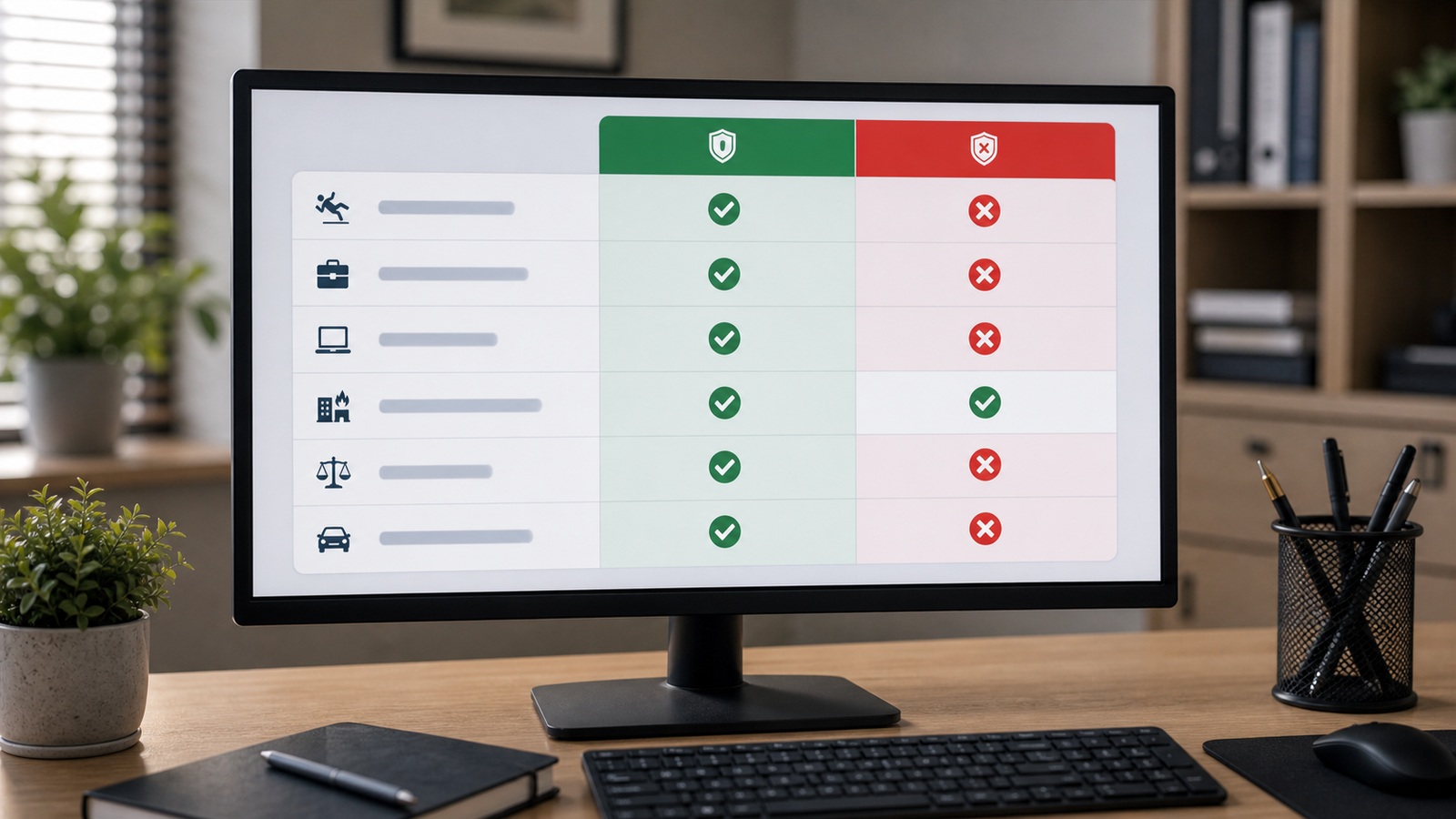
What GL covers
Slip-and-fall, damage to others property while working, certain advertising injury claims per policy wording.

GL typically covers third-party bodily injury, property damage, and advertising injury — not your equipment, professional errors, or employee injuries.
What GL does not cover
Your stolen laptop — property policy. Employee injury — workers comp. Bad advice — E&O. Data breach — cyber.
Coverage checklist
- Read exclusions before assuming full coverage.
- Increase limits when contracts or foot traffic grow.
- Add clients as additional insured when required.
- Pair GL with E&O if you sell professional services.
Frequently asked questions
Required by law?
Often not for home businesses, but commonly required by leases and client contracts.
How much coverage?
$1M/$2M aggregate is a common client minimum.
How much GL coverage do small businesses need?
One million per occurrence is a common contract floor; higher limits suit higher-risk locations or enterprise clients. Your broker should model worst-case third-party claims in your industry.
Does GL cover faulty workmanship?
Often partially under property damage, but professional mistakes usually need errors and omissions or contractor-specific policies. Read your classification carefully.
Choosing limits and deductibles realistically
Client contracts often dictate minimum limits — one million general aggregate is typical floor for vendor agreements. Match contract requirements before bidding; raising limits mid-year is possible but delays signing.
Higher deductibles lower premiums but cash-flow shock on first claim. Self-insure only amounts you can pay within thirty days without harming payroll. Write down deductible amounts you can actually cover from cash reserves, not optimistic forecasts.
Umbrella policies stack above underlying GL and auto when assets or contract sizes grow. They are relatively inexpensive leverage once base policies are solid. Plot deductible size against cash-on-hand in the same monthly finance review.
Subcontractors, 1099s, and who your GL policy actually covers
Hiring freelancers does not automatically transfer their mistakes to your policy. Many US GL policies exclude work performed by uninsured subs or require you to verify certificates before jobs start. If a subcontractor damages a client site, you may be sued first even when their negligence caused it.
Collect COIs from subs before they step on site and match limits to your contract requirements. Require naming your business additional insured when risk warrants. Keep records for at least the statute of limitations in your state — memories fade, lawsuits do not.
Misclassification risk sits adjacent to insurance — treating employees as 1099 to skip workers comp invites regulatory pain separate from GL claims. Insurance agents are not employment lawyers, but they notice when payroll and policy applicant counts diverge. Align facts across HR, contracts, and coverage.
Sources and further reading
Sources
Financial guides team
Reviewed for accuracy · Updated Jun 16, 2026
Independent research on software and digital skills for US readers. Updated regularly, structured for real decisions.



Up next
Health Insurance Basics for Self-Employed Workers in the US